
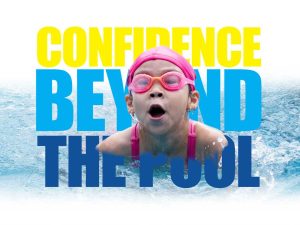
Every week, children come to swimming lessons and practise.
They float. They kick. They control their breathing. They swim back to the wall. They listen to instructions. They try again when something feels difficult. From the pool deck, these can look like individual swimming skills. But together, they are building something much bigger. At Learn to Swim Victoria, our November focus is Confidence Beyond the Pool. Because the skills children learn in swimming lessons are not just for lesson time. Skills learned here go wherever they swim.
The Pool Is a Safe Place to Learn
Swimming lessons give children a familiar, structured environment to practise new skills. They know their teacher. They know where the wall is. They become familiar with the depth, the routine and what is expected of them. That familiarity is important. It gives children the space to practise skills repeatedly until they become more comfortable and confident. But summer often takes children into very different environments. A friend’s backyard pool. A hotel pool on holiday. The beach. A river or lake. A larger aquatic centre. Those environments do not always behave like a swimming pool.
Different Water Brings Different Challenges
A beach can have waves, rips and changing tides. A river can have currents, drop-offs and hidden underwater hazards. A holiday pool may be deeper than a child expects or have unfamiliar entry and exit points. That is why swimming education is about much more than being able to swim a certain distance. Children need strong foundations they can draw on when the environment changes. The National Drowning Report 2025 identifies strengthening swimming and water safety skills as a national priority and highlights the added risks of deep water, open water and unfamiliar aquatic environments.
Every Skill Has a Purpose
Some of the skills children practise during lessons may seem simple, but each one contributes to a child becoming more capable in the water. These skills all have a purpose beyond completing an activity during a lesson.
Floating: Floating helps children understand how their body behaves in the water and gives them a position they can practise returning to calmly.
Breathing Control: Learning to control breathing helps children become more comfortable when their face is in the water and supports calmer responses.
Returning to the Edge: Swimming back to the wall and holding on independently is a practical skill that children can use whenever they are in a pool.
Safe Entries and Exits: Children learn that entering and leaving the water should be controlled and appropriate to the environment.
Listening and Following Instructions: Water safety also means knowing when to stop, listen and follow directions.
Confidence Is Not the Same as Being Water-Safe
Confidence is something we want to build. But confidence should always grow alongside skill, awareness and good judgement. A child who is very comfortable around water may still overestimate what they can do. That is why we want children to become confident and understand that different environments require different choices.
Swimming lessons can help build important skills, but they never replace active adult supervision. At the beach, for example, children should still be closely supervised and families should swim at patrolled beaches between the red and yellow flags. Around inland waterways, conditions can change quickly and hazards may not be visible.
Help Children Think Beyond the Lesson
This month’s Parent Tip is a simple question: “If you needed help in the water, what would you do?” There is no need to turn it into a quiz. Just listen to their answer.
Then you might ask: “Who could you ask for help?”, “What could you do if you couldn’t touch the bottom?”, “What are some safe choices we make around water?”. The goal is not to frighten children. It is to make conversations about water safety feel normal.
Progress Is More Than a Level
It is easy to measure swimming progress by certificates, levels and distances. But there is another kind of progress happening too. A child becoming more independent. A swimmer staying calm when something feels unfamiliar. A child remembering what to do without being prompted. A swimmer recognising when they need help. A child learning that feeling confident does not mean taking unnecessary risks. These are important parts of becoming a capable swimmer.
Confidence Beyond the Pool
As summer approaches, children will have more opportunities to enjoy the water. Our role is to help them build the skills, confidence and understanding they can take with them.Not because swimming lessons remove risk. They do not. But because regular swimming education gives children the opportunity to practise, learn and develop skills that support safer experiences around water. So next time you watch your child’s lesson, look beyond the stroke they are practising.
Look at the independence. The calmness. The listening. The decision-making. The confidence. They are learning much more than how to swim from one end of the pool to the other. Skills learned here go wherever they swim.
Parent Tip of the Month
Ask your child: “If you needed help in the water, what would you do?”. Use their answer to start a calm, positive family conversation about making safer choices around water. Keep building your child’s confidence, swimming skills and water safety knowledge with Learn to Swim Victoria. Speak with our team about your child’s progress or explore our Learn to Swim programs